Italian Club (L'Unione Italiana) Cemetery- East 24th Avenue and N 26th St
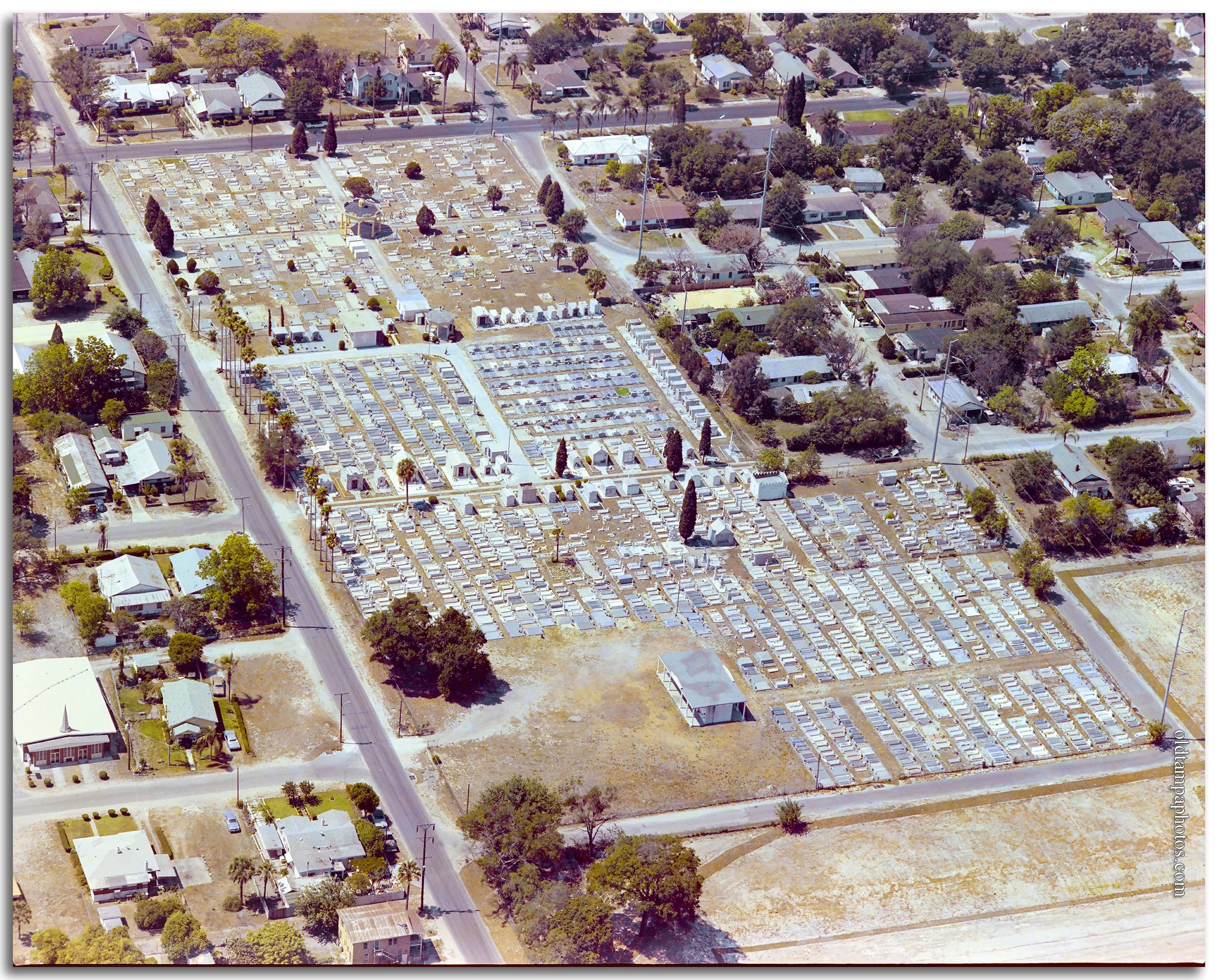
Italian Club and Centro Español cemeteries 26th St and 24th Ave circa mid-1970s. Gandy Collection. Courtesy of the University of South Florida Digital Collection
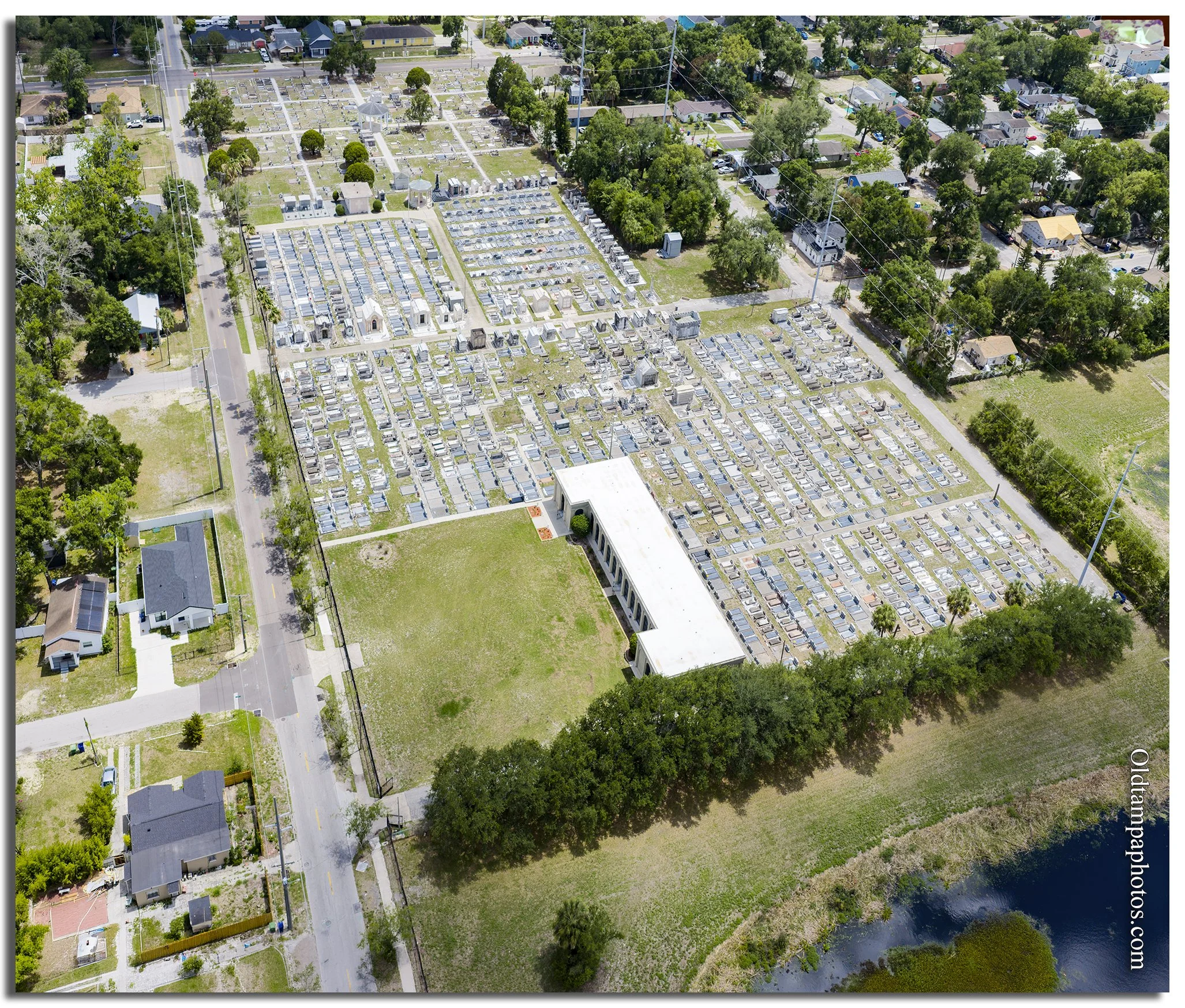
Italian Club and Centro Español cemeteries 26th St and 24th Ave. 2026 © Chip Weiner.
The Italian Club (L'Unione Italiana) Cemetery is one of Tampa's most significant historic burial grounds and a lasting testament to the Italian immigrant community that helped shape Ybor City. Established in 1896 after L'Unione Italiana purchased the property from the prominent Armwood family, the cemetery became the final resting place for generations of Italian immigrants and their descendants. The cemetery also carries one of Tampa’s most complex—and controversial—historical mysteries.
Records indicate the five-acre tract was once home to College Hill Cemetery, according to a patchwork of plat maps, ownership records, and reporting by the Tampa Bay Times. Untangling what happened over a half-century requires a scorecard (thanks to former Times reporter Paul Guzzo for doing the heavy lifting). The paper trail suggests the eventual establishment of the Centro Español (Cementerio Español) burial section and the gradual disappearance of the original College Hill Cemetery, which historians believe may lie beneath the mausoleum area of the Italian Club Cemetery. According to an on-site plaque sponsored by the Italian Club, they purchased the land from the Armwood family, a prominent African American family, in 1896.
When the controversy first arose, the club was using the suspected erased grave area as a parking lot (see the Gandy photo), but they have since closed the driveway, and grass now grows there.
But the story is murky. Death records suggest as many as 1,200 people may have been buried at College Hill. Despite denials from Italian Club officials, a commissioned ground-penetrating radar study, and years of public debate over history and accountability, the question remains unresolved.
The Italian Club reportedly ordered the radar survey, but the findings were never publicly released. The Tampa City Council later requested club representatives appear at a public meeting to address the controversy. No one from the club came.
The aerial photographs add another layer to the story. One striking detail is the transformation of the mausoleum itself. In the 1970s Gandy aerial, a much smaller structure stands on the property. The larger mausoleum that exists today—possibly built over the former College Hill burial area—became a source of renewed controversy when two new niche columbaria were installed inside and offered for sale in 2025 for $2,500 per plot. The mystery may never be solved.
Another remarkable observation from the photos is the density of graves in the Italian section on the right in the aerial panorama below, and the sparsity in the Cementerio Español section on the left.
Beyond the controversy, the cemetery remains one of Tampa’s most remarkable historical landscapes.
The names etched into these headstones tell the story of the immigrants who built Ybor. Cigar workers. Soldiers. Shopkeepers. Entrepreneurs. Families who arrived with little more than hope and built lasting legacies in a new land. Familiar Tampa names appear throughout. Alleged underworld figure Santo Trafficante Sr. and his wife, Maria, are buried here. So are members of the Licata restaurant family, the Ferlitas—early Tampa macaroni pioneers—and Nicolo and Rosalia Alessi, founders of the iconic Alessi Bakery.
The real power of this place lies in the hundreds of lesser-known names. They may never appear in history books, but their presence is what makes this site so historic. They are why Tampa exists as it does today. They are the ones who worked hard to make this city what it is, and now rest in peace. You should go.
© Chip Weiner. All rights reserved
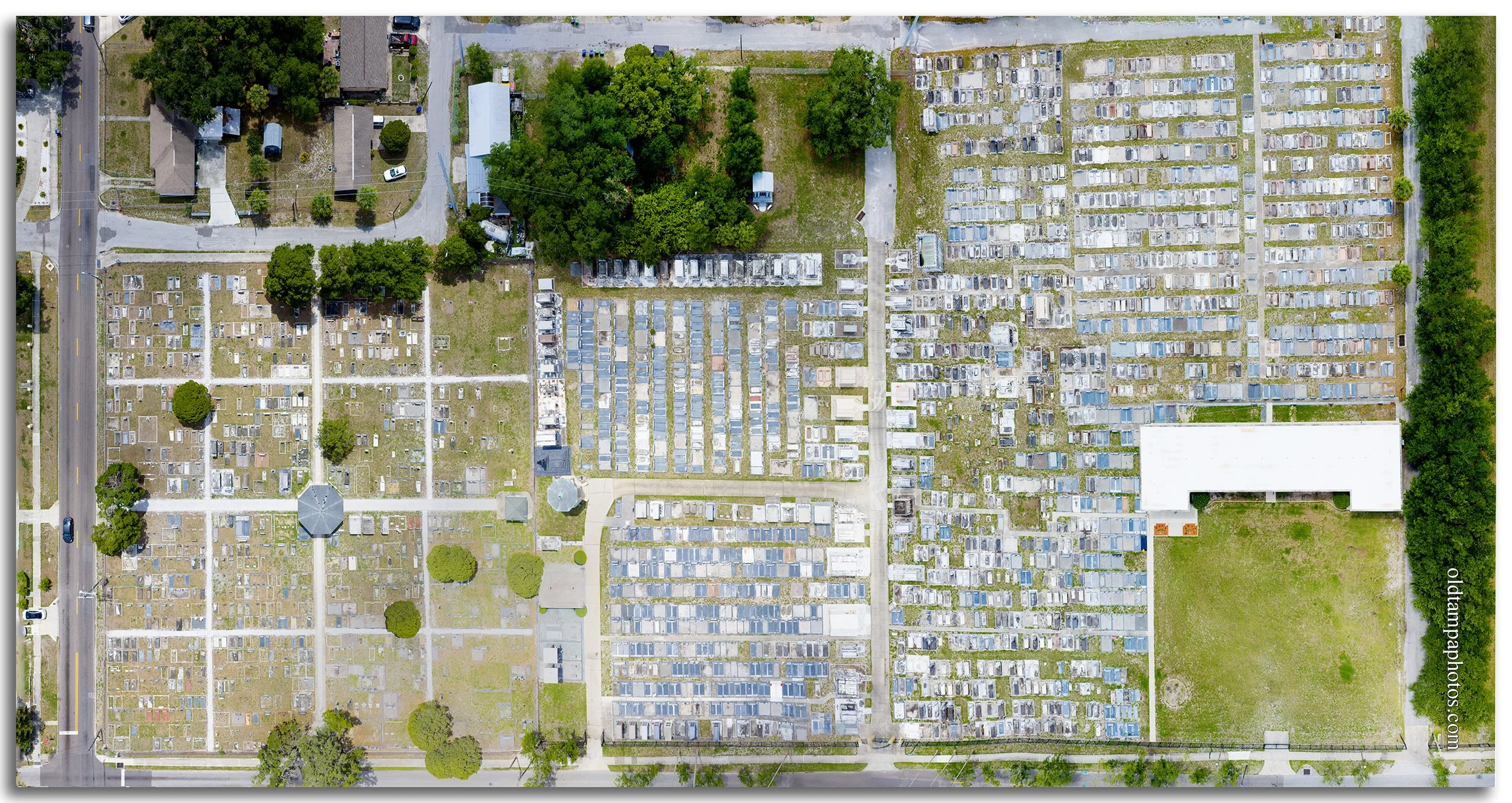
L'Unione Italiana and Centro Espanol Cemeteries panorama. 2026 © Chip Weiner
L'Unione Italiana Cemetery's newer mausoleum, built on land once possibly inhabited by the graves of the College Hill Cemetery, 2026.© Chip Weiner
L'Unione Italiana Cemetery plaque, sponsored by the Italian Club, describes the history of the land.© Chip Weiner
In contrast to the densely filled L'Unione Italiana section, the Cementerio Español section appears relatively sparsely populated. 2026 © Chip Weiner
Comments:
Commenter Date